
Trezor.io/Start® — Starting Up Your Device | Trezor®
Trezor.io/start helps you move from an unopened Trezor device to a ready wallet with software installation, device setup, and guidance for managing crypto.
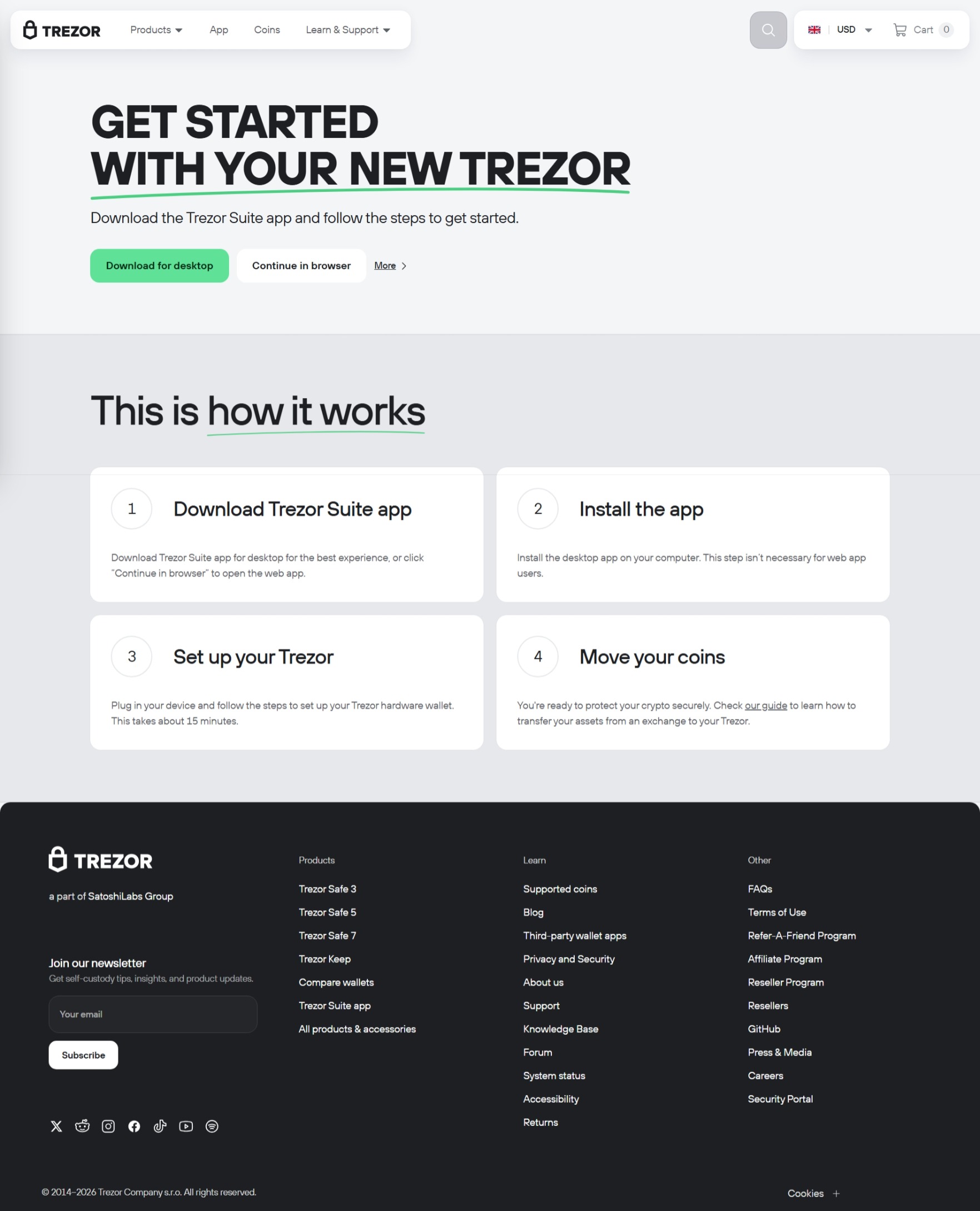
Trezor.io/start: Your Starting Point for Wallet Security
Setting up a hardware wallet is an opportunity to learn how digital-asset self-custody works from the ground up. Trezor.io/start can serve as a starting point for users preparing a compatible Trezor device and becoming familiar with the wallet setup process.
A successful beginning is not only about connecting the device. It is also about understanding the information that must remain private and the checks that should become part of your everyday crypto routine.
Prepare With Care
Start by using trusted Trezor resources for setup instructions and required software. Avoid relying on links from unknown websites, unsolicited emails, or social-media accounts claiming to offer wallet assistance.
Before proceeding, make sure you understand the instructions presented on your screen and device. Taking a little extra time can help prevent unnecessary mistakes.
Pay Attention to Recovery Details
During wallet setup, your device may provide recovery information that can be used to restore access under appropriate circumstances. Treat this information as highly confidential.
Write it down according to the instructions provided and keep the backup in a secure offline location. Never share recovery words with anyone, including people claiming to be support representatives.
Do not type them into websites, forms, emails, cloud services, screenshots, or chat applications.
Learn the Wallet Workflow
After completing setup, become familiar with the basic functions of your wallet. Depending on the compatible device and supported assets, you may use it to review account information, receive cryptocurrency, prepare transactions, and monitor activity.
Before approving a transaction, carefully review the recipient address and amount. When confirmation information appears on your hardware device, compare it with your intended transaction.
Avoid Common Security Traps
Phishing is one of the risks crypto users should understand. A fraudulent website may imitate a familiar wallet interface and attempt to collect confidential information.
Ignore unexpected requests for recovery words, passwords, or other sensitive wallet details. When in doubt, return to a trusted official resource instead of following a suspicious link.
Conclusion
Trezor.io/start can help users begin their hardware-wallet setup with a focus on careful preparation and security awareness. By protecting recovery information, using trusted resources, and verifying transactions before approval, you can establish a stronger foundation for responsible cryptocurrency management.
Updated about 9 hours ago